Concrete Driveway Contractor in Florence, AL
We replace and build concrete driveways, walks, and flatwork across Florence, Alabama — from the river-adjacent lots near the water to the mature west-end neighborhoods. Drainage slope, tree roots, and Shoals clay drive every layout decision, and every estimate starts with a walk of your site. Removal, base, reinforcement, joints, and pour come as one planned job.
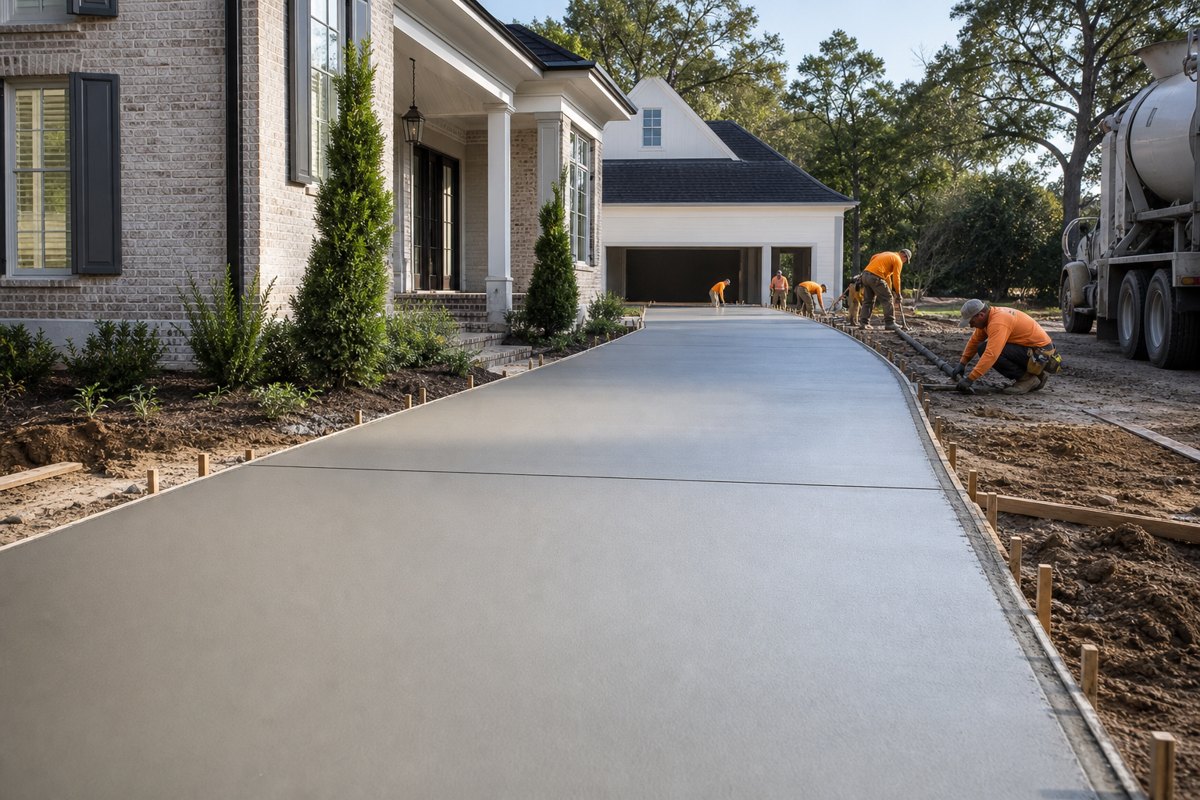
Florence lots and what they ask of a driveway
Florence sits where the Tennessee River valley meets the hills, and its lots show it. Near the river bottoms, ground runs flatter and wetter — a driveway there is mostly a drainage project that happens to end in concrete. Up the hill and through the mature west-end neighborhoods, the canopy is older than the slabs under it, and roots have had decades to find every joint and seam.
The same block can hold an original mid-century slab, a later replacement, and a fresh infill build — so we treat every Florence driveway as its own site read: what the dirt is doing, where the water goes, what the roots are up to, and what the existing grades commit us to at the street and the garage.
Drainage slope near the valley
Flat lots don't forgive lazy grading. When a yard barely falls, a driveway has to be shaped to move water deliberately — cross-slope to the low side, a swale alongside the drive where the yard allows it, and an apron set so water crosses the curb line instead of standing at the street. We plan all of it at the walkthrough, because slope can't be added after the pour.
Downspouts are part of the conversation too. A driveway that receives four downspouts' worth of Shoals rain needs to move it somewhere on purpose — and the walkways tied into the drive get the same treatment so nothing dead-ends at a doorstep.
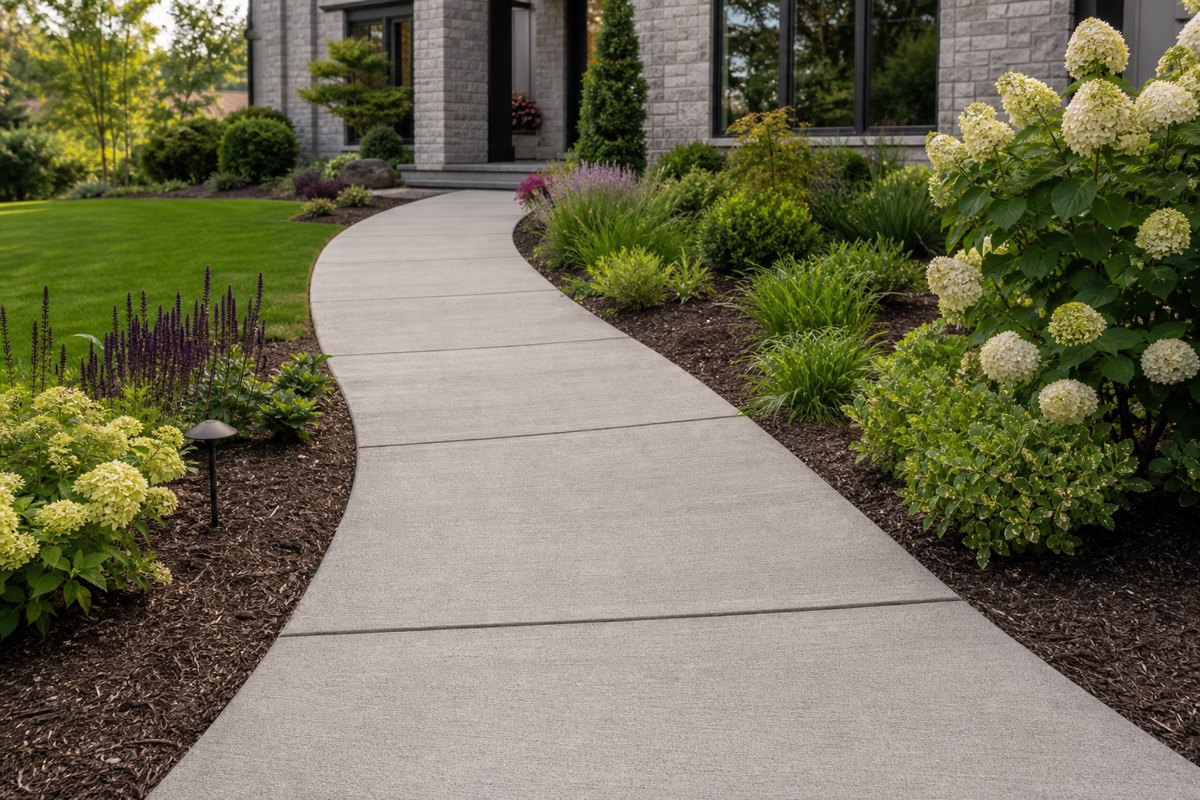
Mature trees and root lines
Old canopy means old roots, and roots follow water — which is exactly what a driveway base holds. Where mature trees share a lot with a drive, we plan the joint layout around the root lines, keep the base compacted so roots look for easier ground, and sometimes let a walk or apron shift two feet to stay out of a trunk's zone. The tree usually wins any argument, so we don't pick the fight.
None of that means avoiding the lot. It means the layout gets drawn with the yard as it actually is — which is the difference between a driveway that coexists with the canopy and one that heaves at the first root. When a replacement does go in beside big trees, we also keep the saw-cut plan denser near the trunk zones: smaller panels flex with small movements instead of fighting them.
Older slabs, infill lots, and everything between
A lot of Florence driveways are on their second or third act: original slabs cracked and settled, thin replacements poured over shortcuts, garages converted and re-converted. When we come out, we're reading the history — what the existing slab tells us about the base under it, what the settlement pattern says about the clay, and whether the next driveway should follow the old layout or fix its mistakes.
Infill builds and newer additions have the opposite problem: everything's new, and the driveway is one of the last pieces to go in. That's the easy version — grade set on purpose, base compacted before the landscaping buries the logic, and a pour that matches the house instead of working around it.
Between those two sit the city's everyday in-betweeners: a house on its second garage, a carport poured as a pad decades ago, a side drive that once served a detached garage nobody remembers. Those lots teach the same lesson in a different accent — the driveway standing there now is a record of decisions made by people who never met, and the next pour gets to be the first one made with all of it in view.
The standard we pour to, from the river to the hills
Every Florence job gets the same spec: full removal when there's an old slab, compacted stone base over the clay, fiber and wire in the pour, a four-inch minimum field with six-inch sections at aprons and heavy use, control joints cut on a spacing plan within the cure window, and grade that moves water away from the house.
It's the same standard on a west-end driveway, a walkway near the river, or a garage slab on an infill lot — because the clay under Florence doesn't distinguish between them, and neither do we.
What we pour in Florence
Free estimates
Walk your Florence lot with us.
Every estimate starts on the site — the slope, the clay, the roots, the grades already there. We'll read your lot in Florence, talk through base and drainage, and put the plan in writing.
No cost, no obligation, no pressure.